Showing posts with label CA funded projects. Show all posts

Friday, 17 December 2021

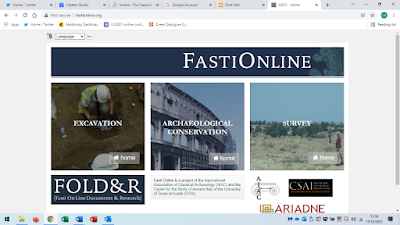
Fasti Online: Bulgaria


Like all the other national sites, Fasti Bulgaria, active since 2005, is jointly managed by AIAC and a national institution, in this case the Sofia University St. Kliment Ohridski. Currently, over 80% of the Bulgarian archaeologists are cooperating and over 1030 Bulgarian archaeological sites are published on Fasti Online, and each year 240 new bilingual excavation reports, both in English and in Bulgarian, are posted. Thus, almost all Bulgarian sites on Fasti Online have multiple excavation reports, many of them for the entire period from 2004 to 2018, without interruption. The Bulgarian sites that were published date from the Paleolithic, the Neolithic and the Chalcolithic periods, the Bronze Age, the Thracian period, the Roman Empire, the Byzantine Empire, the First and the Second Bulgarian Kingdoms and the Ottoman period, ranging from 1,600,000 BP to the 18th century.

In fact, Fasti Bulgaria was the second site that was launched after the Italian one and its success was a driving force and stimulus for other countries in Southeastern and Eastern Europe to subsequently join the project. Thus, since the Bulgarian sector on Fasti Online was up and running and became well known to the international audiences, Albania, Croatia, Kosovo, Moldova, Montenegro, North Macedonia, Romania, Serbia, Slovenia and Ukraine joined the project, while recently Greece also joined by integrating Archaeology in Greece Online with the Fasti platform.

The extraordinary wealth of sites under excavation in Bulgaria makes it an ideal example of the uses of the Fasti in the rapid internet dissemination of new archaeological research. A majority of the hits on the Bulgarian site come from Europe and the U.S., as it is now recognized by British, American and European scholars as by far the most important online academic resource in English on the ongoing exciting archaeological discoveries in Bulgaria. Fasti Bulgaria is a fine example of how the site can be used to promote Bulgaria's rich and important archaeology and, by making the results of Bulgaria’s heritage widely accessible and visible, to attract international visitors and develop the heritage tourism in the country. The site is permanently housed by the Institute for the Study of Ancient Italy at the University of Texas at Austin, and it owes its continued existence to a grant from the Classical Association, for which we are very grateful.  

Elizabeth Fentress, International Association for Classical Archaeology (Scientific Director of the Fasti Online project)

 Nikola Theodossiev, Sofia University St. Kliment Ohridski


Monday, 29 March 2021

Out of Chaos: Reading Greek Tragedy Online

by Paul O'Mahony

I’ve worked in theatre for 18 years - as an actor, writer, producer and director. My theatre company Out of Chaos has toured throughout the UK, Europe, USA and New Zealand, winning several awards along the way. Many of our shows have been inspired by Greek and Roman literature, including Out of Chaos, Unmythable and the upcoming Crossing the Sea.

When the world went into (its first) lockdown in March last year, I contacted Lanah Koelle at The Center for Hellenic Studies in Washington DC to propose a collaboration: we would live stream scenes from different Greek tragedies, with analysis provided by academics associated with the CHS. My intention was to create a community at a time when we were all separated, and to explore these stories for what they might reveal about our current situation. Lanah was immediately enthusiastic; she told me Joel Christensen from Brandeis University had also been in touch about arranging an online group and we decided to meet via zoom on Tuesday 24th March. After working out some (very) rough details we reconvened 24 hours later for our first reading, Euripides’ Helen. We all enjoyed it immensely, and after that we resolved to live stream an episode every Wednesday for the rest of the year. We ended with 41 episodes including all extant tragedies, a few comedies and episodes on the Iliad and Odyssey (plus a 24-hour reading of the whole poem). Each episode of Reading Greek Tragedy Online is 90 minutes long, containing approximately 45 minutes’ worth of scenes and a further 45 minutes of discussion led by Joel and different guest academics.

Throughout the course of the year, the project gained momentum with increasing numbers of artists from around the world involved. We were able to call upon brilliant performers, and we became more and more ambitious with our stagings - we had a Cyclops rock opera, a 25-strong puppet Frogs chorus, and an incredible performance of Oliver Taplin’s translation of the Oresteia across three consecutive weeks. One of our most frequent collaborators, Tabatha Gayle, coined the term zoomcraft to describe what we were doing – in essence, taking whatever we could find at home and turning it into the stage we used each week. We played with lighting effects (it’s amazing what you can do with a cheap ring light), camera angles, some limited costume choices. Each week actors made bold, informed, inspired choices to bring their characters to life.

We received appreciative messages from audiences across the world, and inspired play reading groups as far apart as Wyoming and Brasilia. We launched an outreach competiton called Playing Medea, inviting US and Canadian students to film scenes from Medea. This proved very successful and, with generous financial support from the Classical Association, we launched the UK Playing Medea at the end of last year. Full details are on the Out of Chaos website.

This year the live streams are switching to a monthly schedule and we’re broadening our scope. We’re performing Thyestes, the Argonautica and the Iliad (again), and exploring reception from the 17th Century to the modern day.

The series has led to numerous exciting collaborations (not least a new Greek Theatre course developed with the British American Drama Academy), and demonstrated the power of performance as a shared experience. We have plans to work together as an ensemble when circumstances allow, and we’re in the process of planning new ways of sharing our work online, including masterclasses and workshops. All episodes will remain online as a free resource.

All episodes can be found here: https://www.out-of-chaos.co.uk/greek-tragedy

And here: https://www.youtube.com/c/TheCenterforHellenicStudies

Playing Medea UK competition: https://www.out-of-chaos.co.uk/playingmedea-uk

And here’s a new course that has been inspired by the series: http://www.bada.org.uk/study/greek-theatre/


Paul O'Mahony is Artistic Director of Out of Chaos theatre company.

You can find out more about Out of Chaos on 7 April 2021 during the CA's free online conference, where it will feature in a session on Greek theatre online, an evening of classics-inspired theatre followed by a Q&A chaired by Professor James Robson: https://classicalassociation.org/events/ca-annual-conference-2021/


Tuesday, 10 March 2020

Advocating Classics Education: an update for 2020


by Arlene Holmes-Henderson

The Advocating Classics Education (ACE) project is a national campaign to increase access to the study of the Classical world in secondary schools and sixth form colleges across the United Kingdom. Led by Professor Edith Hall and Dr Arlene Holmes-Henderson and based at King’s College London, ACE is a partnership of fifteen partner universities in Scotland, Northern Ireland, Wales and England. Since 2017, the project has co-hosted twelve high profile events for teachers, students and members of the public to raise the profile, currency and status of qualifications in Classical Civilisation and Ancient History. The project was awarded a major grant by the CA in 2019, and it is my pleasure to provide an update on our activities.

British Museum

An exciting new development in our collaboration strategy is our partnership with the British Museum. Launched in December 2019, ACE is working together with the Schools and Young Audiences Team at the British Museum to optimise the support available to Classics teachers and students. On 6 December, we contributed to the British Museum’s Troy Study Day, which was a sold-out event for 100 sixth form Classics students and their teachers. Professor Hall gave three subject knowledge enhancement lectures, then a plenary lecture, on themes including Greek drama, Greek religion, Homeric epic and Roman epic.

On 13 January, we hosted an ACE event at the British Museum for teachers only. This lecture provided additional textual breadth and depth for the ‘World of the Hero’ component of A Level Classical Civilisation. Afterwards, attendees were given complimentary access to the Troy exhibition. 

On 24 February, we again collaborated to offer ‘OCR Classics in 20 British Museum objects, a day for learners and teachers to experience the prescribed objects for Classical Civilisation and Ancient History ‘up close’. Afterwards, attendees had free access to the Troy exhibition. Completely free, 125 tickets for this day ‘sold out’ just 48 hours.  Clearly there is significant demand for this type of museum-based learning event.


© A.Holmes-Henderson

Classics in Scotland

We held a successful ACE event at the Hunterian museum, University of Glasgow in March 2018. Since then, the Classical Association of Scotland has made good progress in promoting Latin and Classical Studies as Curriculum for Excellence subjects viable for study in primary and secondary schools. We look forward to co-hosting an event entitled ‘Introducing Classics in State Schools’ on 11 March with the CAS and our partner, the University of St Andrews. Invitations have been issued to teachers and school leaders in Fife, Perthshire and Dundee. Contact Nikoletta Manioti at nm66@st-andrews.ac.uk for further details.

Judging Competitions

Dr Holmes-Henderson has recently made her first trip to the country’s largest Classical Association branch to judge the Lytham St Annes Classics competition on 7 March. This year’s question was ‘Which three characters from the ancient world would you invite to a party and why?’.

On 25 March, Professor Hall and Dr Holmes-Henderson are judging the Latin spelling bee at Harris Academy Chafford Hundred in Essex. 30 schools have entered so it promises to be a buzzy event! Professor Hall will give a keynote lecture to all teaching staff and pupils and Dr Holmes-Henderson will provide a CPD workshop for Classics teachers on Classical rhetoric and critical literacy.

Classical Association Conference

ACE is giving a panel of papers at the CA conference in Swansea on 18 April. Our panel title is ‘Accessing Classical Civilisation and Ancient History in Britain, Past and Present Perspectives’. Professor Hall will provide a historical overview. Dr Henry Stead (St Andrews) will share his research into access to Classics via adult education in the 19th century. Dr Holmes-Henderson will provide and analyse statistics showing who has access to Classics in British schools today and Peter Wright (Blackpool Sixth form College) will talk about the growing community of Classics learners in Blackpool. We will join our partners at Swansea University for the schools’ session on 17 April and will use the occasion of the conference to promote the benefits of collaboration between schools and universities.

Promoting Classical Civilisation and Ancient History around the UK

We continue to visit schools and multi-academy trusts to promote the study of the classical world in translation. Professor Hall has made successful visits to Bristol, Hartlepool, Derby, Bromley, Oxford, Guildford and several London schools in the last few months. In a special initiative, she has been visiting NewVIc Sixth-Form College in East London for the Curriculum Enhancement Programme; this college now has a tradition of sending students to read Classical subjects at KCL. The entire group of Gifted and Talented students came to KCL to participate in a 'play-in-a-day' performance of Sophocles' Antigone, with a workshop afterwards on its relevance to political problems today. Professor Hall was also a keynote speaker at a national conference on Curriculum Enrichment at NewVIc in January 2020.

Dr Holmes-Henderson is also providing CPD workshops for English teachers this year. On 1 February, she was the keynote speaker for the TM English Icons conference in Sheffield, and in June she will lead a session at TM Leeds. These events are attended by hundreds of English teachers and are an excellent way of showcasing the appeal of Classical subjects.

Hosting school groups at KCL

Professor Hall has organised, hosted and spoken at several events in the winter of 2019-2020 at KCL. Large groups of school students have come to hear bespoke lectures connecting the ‘World of the Hero’ option to the Troy exhibition at the British Museumparticularly successful events have been run for Runshaw College and Maidstone Grammar School.


© A.Holmes-Henderson

Teaching materials and videos to support Classical Civilisation GCSE and A Level courses

Following our highly successful teachers’ summer school in July 2019, we have uploaded a range of resources to support the learning and teaching of Classical Civilisation qualifications in schools.  These include videos from KCL academics on GCSE, AS and A Level components, and accompanying powerpoint presentations and handouts.  See the ACE website for full details.

Policy influence

We successfully applied for funding from Research England to accelerate the strategic impact of our advocacy work, and in 2020 we will work with key stakeholders in Westminster, Whitehall, the Senedd, Holyrood and Stormont to raise the profile of Classical subjects within national curricula and assessment frameworks.

International interest in the work of ACE continues to grow; in April and May, Professor Hall will be addressing national conferences of teachers and classicists in both Belgium and the Netherlands on the merits of Classical Civilisation and Ancient History courses and ways to introduce them. We are thrilled to be continuing this important and exciting work for Classics education nationally. If you have any requests, suggestions or ideas you’d like to share with us, please email us at ace@kcl.ac.uk.

Dr Arlene Holmes-Henderson is a Research Fellow in Classics Education at King’s College London.


Friday, 1 November 2019

A summer full of Classical Civilisation


by Dr Arlene Holmes-Henderson and Professor Edith Hall


From 22nd to 26th July 2019, seventeen heroic teachers participated in a summer school at KCL which included lectures and curriculum-linked activities on *every* component of the OCR GCSE, AS and A Level Classical Civilisation qualifications. Led by Professor Edith Hall and Dr Arlene Holmes-Henderson, the week-long professional development course attracted teachers of English, Modern Languages, Drama, History and Citizenship from England and Wales. There was a range of prior experience: one participant was about to begin her teacher training degree, others were qualified teachers of non-Classical subjects and some were Classics teachers who felt they would benefit from some specialist input. 

Our KCL colleagues were exemplary. Everyone had read the OCR teaching materials carefully and delivered perfectly bespoke talks and activities. Ellen Adams showed for Homeric World the importance of thinking about the size and setting of early Greek towns; Nicola Devlin managed to pack the entire history of Greek vase-painting into 90 lucid minutes for Greek Art; Emily Pillinger enthralled on Sappho and Catullus for Women in the Ancient World and made the Aeneid’s message on migrants compelling for World of the Hero.

John Pearce showed how the Colosseum can reveal almost everything we need to know about Roman City Life; Lindsay Allen got everybody thinking like an Achaemenid Persian in Invention of the Barbarian; for Imperial Image Dominic Rathbone got us looking at Augustus in new ways; Pavlos Avlamis won the prize for Most Popular Activity when he got everyone to draw Achilles’ shield from Iliad XVIII for World of the Hero; Mike Trapp made Plato comprehensible for Love and Relationships; Hugh Bowden sorted out myth and religion for both GCSE and A Level; Edith enthused on Greek Theatre and the Odyssey, and did a double-act with Roman historian James Corke-Webster on War and Warfare. Arlene led sessions on curriculum content and resources and Roman rhetoric for Politics of the Late Republic.

There will be a legacy in the form of films of the presentations for the KCL website made by Big Face Art, with Tom Russell in charge, and in due course these and all the powerpoints and handouts will be made available on the ACE website too.

But the real efforts were made by the extraordinarily committed teachers who attended, either the whole course or parts of it: Charlotte Cannon, Will Dearnaley, Edda-Jane Doherty, Jenny Draper, Laurence Goodwin, Chandler Hamer, Rob Hancock-Jones, Pantelis Iakovou, Susan Jenkins, Jo Johnson, Lidia Kuhivchak, Jo Lashley, Lottie Mortimer, Judith Parker, Alex Rooke, Saara Salem and Helen Turner. It was a privilege to spend the week with them, and we are going to hear far, far more from them in the future!


Feedback from the teachers has been resoundingly positive:

‘Both my knowledge and my confidence have been transformed this week. Filling gaps has been invaluable and will definitely benefit my students. The comprehensive approach across all units at GCSE and A Level has allowed for flow and connections which will enrich subject knowledge as a whole. The most important thing which I’ll take away from this week is the confidence to analyse sources and structure topics. The course will change my professional practice because it will help me to make my delivery of the course better quality and more relevant to my students.’

‘My confidence has increased hugely both in terms of subject content and effective delivery of it. Since the start of the week, I have much greater awareness of the expectations of exam boards as well as resources. This course has been the key factor in my school permitting the introduction of Classics in my school. I would absolutely attend another course.’

‘This has been tremendous CPD. I feel really confident after a brilliant week.’

The summer school was made possible through generous donations from the King’s Widening Participation Fund, the King’s College London Classics Department, The Roman Society and the Hellenic Society.

The support of the Classical Association is vital in facilitating the ongoing work of the ACE project. We are indebted to the CA for its contribution and look forward to further fruitful collaboration.

The Advocating Classics Education project was awarded a major grant by the CA in 2019.  Based at King's College London and led by Professor Edith Hall and Dr Arlene Holmes-Henderson, the project aims to extend the availability of Classical Civilisation and Ancient History qualifications in UK state schools.


Monday, 12 August 2019

Decompartmentalising Thucydides

Dr. Maria Fragoulaki (Cardiff), Visiting Fellow at the Institute of Classical Studies (2018-19), reports on a day on Thucydides’ modern reception hosted by the ICS earlier this year.

(this blogpost is reproduced here with kind permission of the ICS, having first been published on 28 June 2019 on the ICS Blog, which can be found at https://ics.blogs.sas.ac.uk/)

What do an analysis of the ‘chain of participles’ in Thucydides’ History of the Peloponnesian War and its implications for the text’s translation and poetic qualities, online games based on the Melian Dialogue and ‘Thucydides Trap’, the International Relations catchword, have in common? The answer is that they belong to the diverse and dynamic space of Thucydides’ modern reception. These and other themes, such as Thucydides’ role in the life and work of twentieth-century politicians, modern theatrical adaptations and performances of his History, and his re-invention as International Relations guru by modern American politics of the 1950s and the 1960s, were explored at the international workshop on ‘Thucydides Global: Teaching, Researching, Performing Thucydides’, which took place on 30 April 2019, hosted by the Institute of Classical Studies. The event aimed at a ‘global’ approach of Thucydides’ modern reception through a variety of themes and media, with participants from within and outside the academy, from the UK, Germany, US, Brazil, and Greece. The workshop was a collaboration of Cardiff University and Ruhr Universität Bochum in Germany, and was supported by the Society for the Promotion of Hellenic Studies and the Classical Association, UK, who subsidised Cardiff University students to attend the event. The papers themselves, the interaction between the speakers, and the involvement and comments of the audience, all contributed to the day’s ‘global’ success. The day opened with a welcome address by the Director of the Institute of Classical Studies, Greg Woolf, followed by a brief introduction by me in which I aimed to present the rationale and scope of the workshop.

Thucydides’ text has broken the boundaries of its time, having had a formative influence on political philosophy, International Relations (IR), history writing, philosophy of history, art and literature. In an increasingly interconnected world in financial, cultural and political terms, the historical lessons of this ‘difficult’ and long historical narrative from ancient Greece appears to be a source of inspiration for groups and individuals in the academy and beyond. Thucydides is a staple of any introductory course to IR theory, and is often quoted (or misquoted) in modern political debate and less expected contexts, such as mindfulness training or new age wisdom, as Neville Morley reminded us. In addition to IR and politics at large, the day also comprised papers on the poetics and politics of Thucydides’reception, through the themes of translation and performance, two under-explored areas.

The term ‘global’ in the title of the workshop was used to signpost the text’s prismatic quality and our aim to explore the potential of breaking boundaries which traditionally tend to divide the field: one ‘compartment’ can be described as ‘mainstream reception’, with special focus on political science, IR, anthropology, social science etc; and another is occupied by the so-called ‘traditional approaches’, largely text-centred, and heavily pre-occupied with the problems of philological and historical scholarship from different perspectives. Both ‘compartments’ were represented in the workshop by experts who have devoted considerable amounts of time, energy and care to this ‘global’ author and are open and committed to continued dialogue and exploration.

There is something paradoxical about Thucydides’ work: on the one hand it is a text that famously resists easy interpretation (and translation), containing abstractions and ambiguities (especially in the speeches), and on the other it has been used a lot for maxims or crude historical analogies and interpretations. Christian Wendt discussed Thucydides’ ‘labelling’ and itemisation in relation to the idea of ‘Thucydides Trap’, an IR maxim of global buzz, and the text’s suitability for inspiring political analogies. The problem of crude interpretations in the area of IR theory was also touched on by Neville Morley, who concentrated on the famous Melian Dialogue and its potential of providing means of interpreting situations in real life (see Neville’s blogpost reflecting on the day). Undeniably, one real-life analogy in the light of Yanis Varoufakis’ engagement with game theory could be the ‘Parallel [to an extent] Lives’ or rather ‘Parallel Dramas’ of Grexit and Brexit; although on the day we all appeared to have tacitly agreed not to engage head-on with these words. Another ‘false myth’ was deconstructed by Liz Sawyer, who demonstrated that Thucydides entered the field of IR theory as ‘founding father’ later than is often assumed, namely in the 1950s and early 1960s, as a result of a combination of factors related to US educational policy, ideology and rhetoric, the end of WWII and the start of the Cold War.

Thucydides as source of inspiration and subject of study for two politicians and men of letters of the modern era of different backgrounds was the subject of two papers: one by Hans Kopp, who examined the case of the Danish Minister of education and classical philologist Hartvig Frisch (1893-1950) in the 1930s and 1940s; and another paper whose subject was the Greek Prime Minister Eleutherios Venizelos (1864-1936) and his translation of Thucydides’ History, delivered by Sir Michael Llewellyn Smith, himself a man of letters and political action, with a long career as a diplomat. In both papers the question of translation of Thucydides’ text also emerged; this also took centre stage in the paper of Sandra Rodrigues da Rocha. By concentrating on markers of oral language in Thucydides, namely ‘chains of participles’, Sandra explored the oral, poetic and emotive qualities of the text in the framework of the act of translation.

Lessons of War I’, performed at the European Parliament,
Yehudi Menuhin Space, March 2019.
Photo copyright: George Tziampiris 
Translation is a creative process and delivers a new text. The boundaries of creativity are explored even further when translation is combined with adaptation for the stage, which was the theme of John Lignades, member of the ‘Dramaticus’ team (bringing ancient Greek history on stage) and the Hellenic Education and Research Center (HERC), an educational organisation facilitating study abroad programmes in Greece focusing on interdisciplinary classics. John presented the ‘Lessons of War’, a theatrical play based on Thucydides, which was created in the so-called Greece of the crisis (post-2010 Greece) and was staged in major venues in Greece and at the European Parliament in March 2019. The symbolism of this modern political forum hosting a performance related to the Athenian democracy of C5 BCE is unmissable. Paul Cartledge, a ‘global’ ancient historian and expert in the reception of ancient political thought and institutions, also familiar with the work of the ‘Dramaticus’ team, introduced the presentation.

Left: Acropolis playbill image; Right: Theatrical review, The Daily Herald, 25 November 1933

The last part of the workshop comprised short responses-comments by three interdisciplinary classicists. Dan Tompkins presented us with an alternative and intriguing panorama of IR perspectives and experts.Peter Meineck, also a theatre practitioner, concentrated on the theatricality and experiential-cognitive-therapeutic dimension of Thucydides’ war narrative. Sara Monoson commented on crisis and Thucydides’ use as source of inspiration in such moments, considering how we might think about what makes a particular point of reception significant. The idea of Thucydides’ cherry-picking surfaced again and the criteria which might lead our choices. Sara’s comparative examples drew on American political oratory and the play ‘Acropolis’ (1933) by the American playwright Robert Sherwood. The day generated vibrant dialogue and exchange of ideas, with which we hope to continue. Thucydides’ de-compartmentalisation in progress…

Maria Fragoulaki


Wednesday, 12 September 2018

Actors of Dionysus: 'Exploring the Classics' Project

by Megan Rogers

Actors of Dionysus (aod) was founded in 1993 to put flesh on the bones of ancient Greek drama and to provide innovative and accessible versions of this rich canon of work. Since then, we have toured over 50 radical and highly visual productions of classic Greek plays and new writing inspired by myth, performing to over 750,000 people nationally and internationally and becoming the UK’s leading interpreters in this field.
We have toured extensively throughout the UK and Eire, performing regularly at venues including York Theatre Royal, The Lowry, Theatre Royal Winchester, Brighton Dome, Greenwich Theatre and The Other Palace. We also perform at international festivals including the Edinburgh Festival Fringe and High Fest, Armenia, as well as in ancient theatres in Greece, Turkey, Croatia and Albania.
aod is divided into three strands:
aodProductions tours new theatrical adaptations of ancient Greek drama and new writing inspired by classical mythology;
aodEducation tours high-quality productions and produces a rich and varied outreach programme including workshops, books, DVDs, audio-CDs, pre- and post-show lectures and discussions for schools, colleges, young people and students in higher education;
aodEvents produces ambitious and high-end one-off performances in distinctive venues with some of the UK’s leading performers.
© aod
We have been working on a campaign of free workshops for schools and colleges this year, running Classics and drama workshops in state schools and colleges in London, and targeting groups that would not usually have access to external facilities and material to support their learning.  Our fantastic Education Officers have visited a wide range of schools and colleges in the London area with our bespoke workshops, working with students on Antigone and Lysistrata and looking at the Greek chorus, conventions of Greek staging and the tragic hero. The campaign has had an amazing response, highlighting not only the demand for external practical educational support, but also the relevance of the Classics today. We strive to keep the Classics alive in education, working practically with students to re-stage them in modern, exciting ways, and this campaign has highlighted the fun that students have when working in this way:
‘We loved the new approaches to the text - this has worked really well in subsequent sessions, and students are still using them.’
Rowenna Mortimer, Working Men’s College

‘The whole workshop was wonderful! My students enjoyed it immensely and were inspired by Mark’s enthusiasm for Greek theatre. We are rarely able to have workshops because of the expense so thank you so much for giving us this opportunity.’
Izzy Forrester, Archbishop Tenison’s School


© aod 
In April, the Classical Association kindly awarded us £2,000 towards our ‘Exploring the Classics’ Workshops and Education Pack Project. This funding will allow us to roll out our free workshop project across the country next year, as well as enabling us to create a new Medea education pack which will be offered as a free learning and teaching resource. We will be able to further expand access to the study of classical Greek drama and literature, and it will enable us to reach thousands of additional students across the country with educational resources that will support, promote and advance the study of Greek theatre for years to come. We are very grateful to the Classical Association for helping to support projects which make a real difference to students who may not otherwise have access to these kinds of resources.

To enquire about booking a drama or Classics workshop for your school, college or university, contact megan@actorsofdionysus.com

Megan Rogers
General Manager, Actors of Dionysus


Wednesday, 10 January 2018

Cymru Wales Classics Hub INSET Day at Lampeter (December 2017)

by Matthew Cobb

On the penultimate Saturday (16th) before Christmas, when many schools and sixth forms were finishing up for the (calendar) year, the University of Wales Trinity Saint David hosted a teacher training day for Classicists. This event was part of a series of INSET days organised by the Cymru Wales Classics Hub, the first of which was hosted by Swansea University, and the second by Cardiff University. This third INSET day, organised by Dr Matthew Adam Cobb, was held on Lampeter Campus.


A range of workshops were run by Classicists and Ancient Historians from the Faculty of Humanities, including Dr Cobb, Dr Brenda Llewellyn Ihssen, Dr Fiona Mitchell, Dr Ruth Parkes and Dr Kyle Erickson. Closely allied to the OCR Classical Studies syllabus, these workshops covered themes as diverse as ‘heroic masculinity in art’ to the ‘portrayal of the Julio-Claudian emperors’. The sessions were designed to explore creative and interactive ways of engaging with pupils/students – a particular focus of the sessions run by Dr Brenda Llewellyn Ihssen and Dr Kyle Erickson – as well as means of getting them to think in a more nuanced and critical way about the source material.

A number of teachers and aspirant teachers from across the UK attended the event. All present were keen, engaged and had very constructive experiences (as can be judged from the very positive feedback). Thanks to the kind support of the Classical Association, we were able to offer the attendees a free lunch, and teas and coffees, as well as a modest travel reimbursement. 

The fourth in the series of CWCH INSET days is expected to run later in 2018.  

Dr Matthew Cobb is a Lecturer in Classics at the University of Wales Trinity Saint David, whose research interest lies in the cultural and economic interaction between the Mediterranean and Indian spheres.

Tuesday, 24 October 2017

The Ancient World Immersive Classroom Project

The Durham Sixth Form Centre was awarded a grant of £415 by the CA earlier this year towards the resources required to create an immersive classroom, with the aim of inviting primary schools to take part in lessons about the Ancient World.  Now that the project has been firmly established, it is hoped to hold the sessions more frequently and to run them at local primary schools.

by James Miller

We have twice approached our local primary schools to offer to take their studies on Greece and Rome very much further with an immersive and interactive experience. Costs and time meant that we have to cap this oversubscribed option at 4 classes (c.120 students).


Students came in and did a quick session connecting labels to parts of a temple. They also listed the things they needed in a modern classroom to be a point of comparison with the ancient.

The students were then divided into two groups:


The first – suitably dressed in costumes - went into our classroom and did a series of activities: chanting the Greek alphabet, chanting the Latin numbers, writing on ostraka, writing on cerae with styli, watching (and counting in Latin) our volunteers being beaten, in line with evidence from pictures such as the one above and reading texts in scriptio continua on papyrus.


I would like to acknowledge a massive debt to Professor Dickey who shared ideas and a chapter of an unpublished book to help with this aspect.

The other half of the group made use of their new facts about temples to build these from confectionery.  Although we did encounter sacrificial octopuses and unicorns (!), it was clear that ideas about what a temple was for and how it was used were involved in their decisions, and some groups had a go at a Pantheon-style domed roof using some impressive round-biscuit corbelling:


Students then swapped their roles (Temple ↔ Classroom). At the close students identified the differences between what they had listed about classrooms and what they had found, and also filled in coloured stars describing one thing they had learned about Temples, one about Education, and the thing they had most enjoyed. No students struggled to identify things learned and all had enjoyed themselves (quite stickily).


Sadly, after the final group left, the gazebo caught the wind and took off in a suicidal bid for freedom, but this has been replaced.

We would like to thank the CA for the funding and (again) Professor Dickey for some of the ideas.


James Miller is Head of Department in Classical Civilisation, Philosophy and EPQ/Lead Practioner at Durham Sixth Form Centre